Vakho Bugadze “The Caucasian Orangery”
Since the 1990s, Vakho Bugadze has been introducing into Georgian art a specific version of “body language” in terms of new figurativeness. Being a professional sculptor, he works using various media. He is interested in the human body and its plastic language, and shares the feelings, emotions, conflicts, and discoveries that result from bodily contact. The particular expression that runs through his works is determined by the metamorphosis of “bodies” under the influence of the universe – body language that manifests itself under the pressure of feelings and adventures. For the artist, the universe is an adventure of the body. He is interested in the culmination – a bodily condition that can cease and evolve into another formation. The works are made using diverse materials and techniques, including painting, graphic drawing, collage and photo editing. Their size is monumental, and his method is to produce them in series.
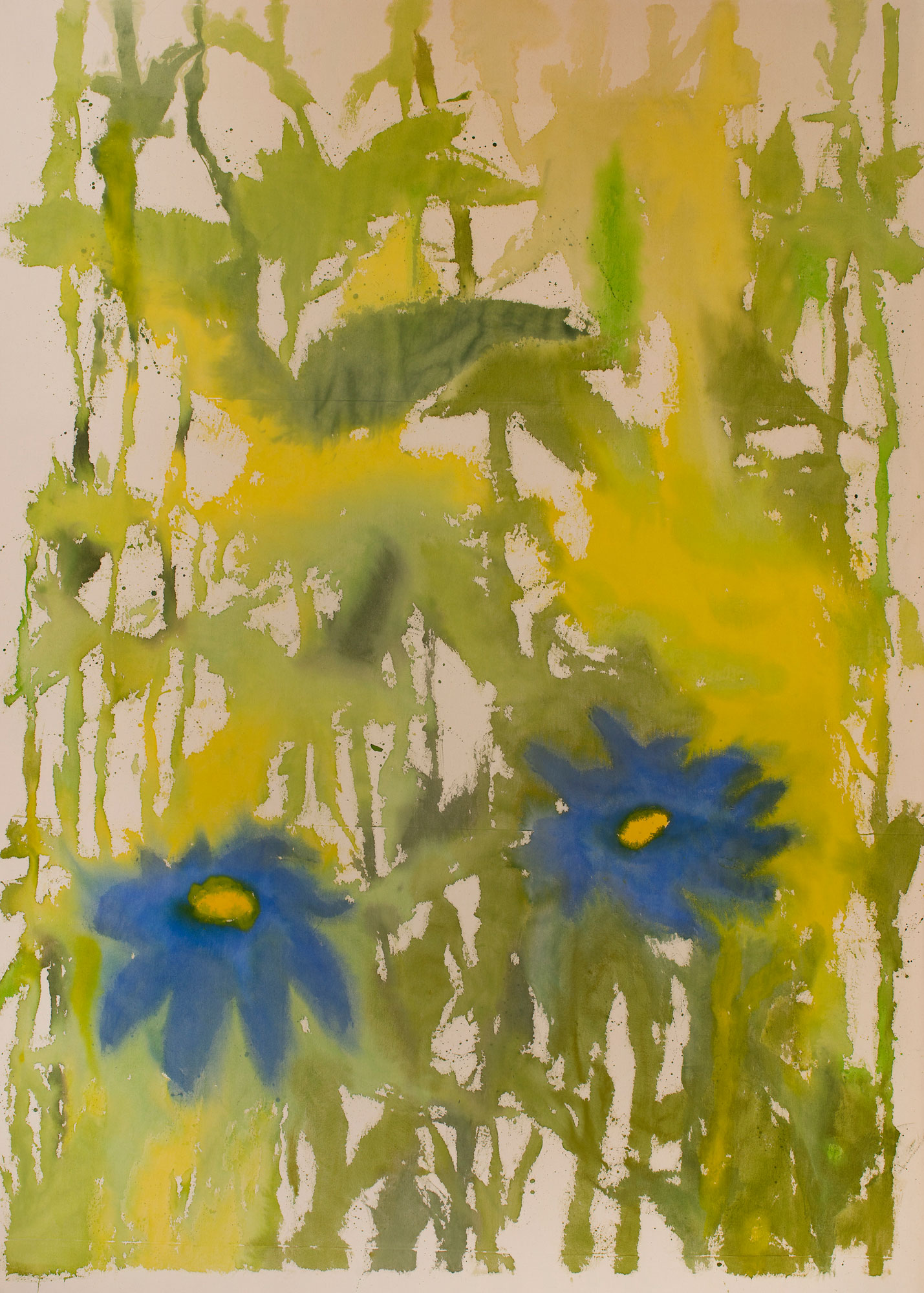
Flowers first came into Vakho Bugadze’s focus a few years ago when he “discovered” them, became excited at this first encounter, and began to express his feelings towards them by producing multiple images. Flowers had never been a subject of any of his works before, nor had his landscapes featured any kind of vegetation. His artistic world, bounded by conventional or architectural backgrounds, completely lacked this component. Suddenly, however, from 2021, images of flowers made using oil paints or watercolors started to emerge as saturated artistic spots on Bugadze’s large-scale canvases and fabrics of various textures. The transition to plant paintings marked a new phase, following on from his abstract images that had been produced using the same technique. The artist transferred his own creativity from urban settings into airy spaces, where he created a model of the ideal world and applied a plant narrative to demonstrate its superiority.
The artist produces the image of a plant as an unidentified species, in such a way that he often does not even define the upper and lower parts of the picture. The painting may also be perceived as being “upside down” mode, which is caused by the object’s separation from real space and its characteristic logical dimensions. It literally means being uprooted; in a state of a free fall and aimless flight. It resembles a situation where something is washed away by water or dispersed by the wind. The whole is filled with the tension of disappearance. Free backgrounds that are spread over large vertical canvases draw associations with the concept of emptiness from Japanese paintings, and represent “waterfalls” of cascading flowers created by the spontaneous flowing arrangement of colored spots. Torrents of flowers or a single flower petal float or fly on the surface of the work to create the effect of a reflected image. The texture of the paint creates murky circular ripples that radiate as if from a pebble dropped into the water. Sometimes the images resemble trembling flowers or leaves that are scattered in the air. These spots are colored “signals” that simultaneously focus on two phases of the plant’s state – that of blooming and of losing petals. In this way the artist shares with us the strange, magical, and beautiful effect of the flower’s short-lived existence. He paints the plant at the point of culmination – emanating beauty and blossoming, deepening the pain of disappearing beauty and reminding us of his work’s main theme: an empathetic position towards bodily metamorphoses, embracing both strong feelings and the inevitability of the end of physical existence. And, if earlier Bugadze showed this position through dramatic emotions (Pieta) and by demonstrating the “adventures” of the body and its expressive textures (Hippodrome, Centaur’s Love), now, through this series of flowers, he moves this feeling from the register of weightiness to a state of gentle excitement. The works create an impression that the author has come to terms with the rational inevitability of bodily death, and awarded it a festive brilliance. The vegetation that is created by the deformed outlines of transparent spots is loaded with bright shimmering flowers or filled with soft colors. Through a combination of the rhythm of stems and leaves inserted into the vertical schemes of the paintings, the empty backgrounds, and dynamic images, the artist creates a formula that helps the bodies of objects to reach the limit of another essence: they lose their “matter” corporeity and thus the pain of the ephemeral condition of existence also vanishes.
The series consists of twelve works which were developed by Bugadze between 2021 and 2022.
“The Caucasian Orangery” is a conditional title; a curatorial position regarding the name of the exhibition, which the artist also agreed with. The gallery’s “garden model” project and a new phase of the artist’s work come together in a brand new exhibition space that opens its doors with this solo show by Vakho Bugadze. The geographical localization in the title offers an allusion to the place of Georgians’ physical existence: the theme of our roots and our uprooting from them. These elements become particularly relevant under conditions of globalization, war, and constant displacement – the inherent problems of the Caucasus, a territory which is constantly subject to the pressure of geopolitical threats.
Baia Tsikoridze
ვახო ბუღაძე „კავკასიური ორანჟერია“
ვახო ბუღაძე ქართულ ხელოვნებაში “სხეულის ენის” სპეციფიკურ ვერსიას ამკვიდრებს. პროფესიით მოქანდაკე, მუშაობს სხვადასხვა მედიაში, აინტერესებს სხეული, და, იმ განცდებს, გრძნობებს, კონფლიქტებს და აღმოჩენებს გვიზიარებს, რასაც სხეულის სამყაროსთან კონტაქტი იწვევს. სხვადასხვა გარემოებებით გამოწვეული სხეულთა მეტამორფოზა, განცდებისა და თავგადასავლების წნეხის ქვეშ მოქცეული სხეულის მეტყველება მისი ნამუშევრების განსაკუთრებულ ექსპრესიას განაპირობებს. სამყარო მხატვრისთვის – სხეულის თავგადასავალია. მას აინტერესებს სხეულებრივი მდგომარეობის ის კულმინაცია, რომელიც შეიძლება, ნებისმიერ დროს შეწყდეს, დასრულდეს, სხვა ფორმაციაში გადავიდეს. ნამუშევრებისთვის არჩეული მასალა და ტექნიკა მრავალგვარია – ფერწერის, გრაფიკის, კოლაჟის, ფოტომონტაჟის ჩათვლით. ზომა მონუმენტურია, სერიულობა კი – მეთოდი.
ვახო ბუღაძის თვალთახედვის არეში ყვავილები რამდენიმე წლის წინ მოხვდა. მან „აღმოაჩინა“ ყვავილები, თითქოს პირველად ნახვის აღფრთოვანებით შეხვდა მათ არსებობას და ამ დამოკიდებულების გადმოცემას შეუდგა მათი მრავალჯერადი პროდუცირებით. ყვავილი აქამდე შექმნილ მის არც ერთ ნამუშევარზე არ გვხვდება, ლანდშაფტიც კი არსადაა მცენარეული. პირობითი თუ არქიტექტურული ფონით შემოსაზღვრული მისი მხატვრული სამყარო ამ კომპონენტის გარეშე არსებობდა და უეცრად, 2021 წლიდან, დიდი ზომის ტილოებზე და სხვადასხვა ფაქტურის ქსოვილებზე ჩნდება ყვავილების გამოსახულებები – შესრულებული ზეთის საღებავით ან აკვარელით და გაჟღენთილი ფერწერული ლაქებით. მცენარეულ ობიექტებზე გადასვლა ახალი ეტაპია ამავე ტექნიკით შესრულებული აბსტრაქციების შემდგომ. მხატვარს თითქოს საკუთარი შემოქმედებაც გაჰყავს ურბანული პეიზაჟებიდან ჰაეროვან სივრცეში, სადაც მცენარეული ნარატივით იდეალური სამყაროს მოდელს ქმნის და მის უპირატესობას გვიჩვენებს.
მცენარის ხატს მხატვარი მისი არაიდენტიფიცირებული სახეობით ქმნის და ხშირად ნახატის ზედა და ქვედა მხარეს არც განსაზღვრავს – გამოსახულების აღქმა თავდაყირაც არის შესაძლებელი, რასაც ობიექტის რეალური სივრციდან მოწყვეტა და მისთვის დამახასიათებელი ლოგიკური განზომილებიდან ამოვარდნა განაპირობებს. პირდაპირი მნიშვნელობით ფესვებიდან მოწყვეტაა, თავისუფალი ვარდნა, არამიზნობრივი ფრენა; წყალი რომ წაიღებს და ქარი რომ გაფანტავს, ისეთი ამბავია და გაქრობა-გაუჩინარების დაძაბულობაც იგრძნობა. დიდი ზომის ვერტიკალური ფორმის ტილოებზე გაშლილი თავისუფალი ფონი იაპონური მხატვრობის სიცარიელის კონცეპტთან ასოცირდება და მასზე ფერადი ლაქების სპონტანური განლაგებით შექმნილი ყვავილების „ჩანჩქერები“ მოედინება; ყვავილების ტევრი ან ცალკეული ყვავილის გვირგვინი მიცურავს თუ მიფრინავს ნამუშევრის ზედაპირზე, რითაც ხან წყალში არეკლილი გამოსახულების ეფექტი იქმნება – საღებავის გაჟღენთილი ფაქტურით, რომელიც თითქოს წყალში ჩავარდნილი კენჭისგან წამოსულ წრიულ წრეებს ქმნის, ხან ყვავილების და ფოთლების ჰაერში მიმოფანტვის ილუზია ჩნდება – მათი მთრთოლარე აბრისით. ეს ლაქები თითქოს ფერადი „სიგნალებია“, რომელიც მცენარის მდგომარეობის ორ ფაზას ერთდროულად აფიქსირებს – ყვავილებით შემოსვას და მისგან განძარცვას, რითაც მხატვარი ყვავილის მოკლევადიანი არსებობის უცნაურ, ლამაზ და ჯადოსნურ ეფექტს გვაზიარებს და მცენარეს სილამაზის გამოფრქვევის, გაყვავილების კულმინაციურ პროცესში ხატავს; ხატვის „სასწაულით“ სილამაზის გაუჩინარების ტკივილს ამძაფრებს და ამ მეთოდით კიდევ ერთხელ გვახსენებს მისი მხატვრობის ძირითად თემას – ემპათიურ პოზიციას იმ სხეულებრივი მეტამორფოზების მიმართ, რომელიც ძლიერ განცდებს და ფიზიკური არსებობის დასასრულის გარდაუვალობას მოიცავს. და, თუ ადრე ამ პოზიციას იგი დრამატული ემოციით გადმოსცემდა („პიეტა“, „სტელას ბაღი“), ექსპრესიული ფაქტურით ახერხებდა სხეულის „თავგადასავლების“ დემონსტრირებას („იპოდრომი“, „კენტავრის სიყვარული“), ახლა, ყვავილების სერიაში, ეს განცდა სიმძიმის რეგისტრიდან ფაქიზ მღელვარებაში გადააქვს. შთაბეჭდილება ისეთია, თითქოს ავტორი შეეგუა სხეულებრივი აღსასრულის კანონზომიერ გარდაუვალობას და მას სადღესასწაულო ბრწყინვალება მიანიჭა. გამჭვირვალე ლაქების დეფორმირებული მოხაზულობით შექმნილი მცენარეული ობიექტები დატვირთულია მოციმციმე და კაშკაშა ყვავილებით ან აღვსილია ნაზი ფერადოვნებით. ნახატის ვერტიკალურ სქემაში ჩასმული ღეროების და ფოთლების რიტმით, ცარიელი ფონის და დინამიკური გამოსახულების კომბინაციით მხატვარი ქმნის ფორმულას, რომლის მეშვეობითაც მის შემოქმედებაში ობიექტის სხეულებრიობამ სხვა სუბსტანციის ზღვარს მიაღწია, „მატერია(ლურობა)“ დაიკარგა და არსებობის ეფემერული კონტექსტის ტკივილიანობა მოიხსნა.
სერია თორმეტი ნამუშევრისგან შედგება და მხატვარი მასზე 2021 – 2022 წლებში მუშაობდა.
„კავკასიური ორანჟერია“ – ეს სახელწოდება პირობითია, გამოფენის სახელდების კურატორული პოზიციაა, რომელსაც მხატვარიც დაეთანხმა; გალერეის პროექტის -„ბაღის მოდელი“ და მხატვრის შემოქმედების ახალი ეტაპის თანხვედრა და პრეზენტაციაა ბაია გალერეის ახალ სივრცეში, რომელიც ვახო ბუღაძის ამ გამოფენით იხსნება. თემის სახელწოდებაში გეოგრაფიული ლოკალიზება ჩვენი ფიზიკური არსებობის ადგილის მინიშნებაა, ფესვების და მისგან მოწყვეტის თემაა, რომელიც გლობალიზაციის, ომის და მუდმივი გადაადგილების პირობებში განსაკუთრებით აქტუალურია – კავკასიის პრობლემაა, რომელიც მუდმივად გეოპოლიტიკური საშიშროების პულსაციით ფეთქავს.
ბაია წიქორიძე