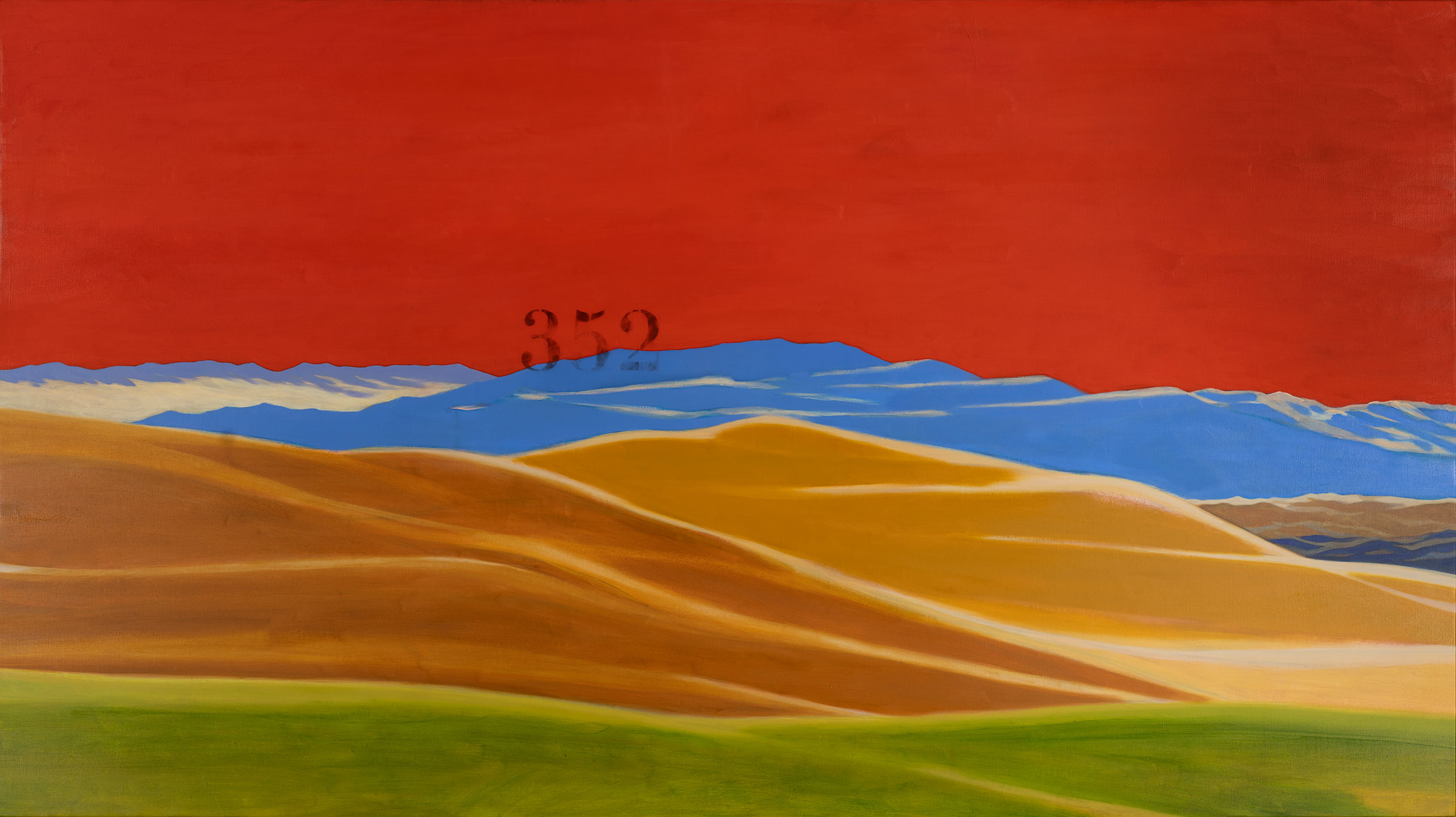
Kote Sulaberidze “Lovely Garden…”. 2023
With his latest exhibition project “Lovely Garden…” Kote Sulaberidze has created a minimalistic model of the grandeur of the universe through colorfully decorated landscapes that are depicted against backgrounds of blood-colored skies.
These pictorial objects, which were produced from watercolor sketches on paper, have become a landmark concept and an exhibition project for the artist who began his travels while the Covid-19 pandemic lockdown was in force.
The series, consisting of eight large-scale compositions, was created between June and September 2023 based on landscapes discovered in different regions of Georgia.
For the current series, the artist has chosen to focus on a single panoramic scheme: large-format desolate spaces with large expanses of sky, a mountainous landscape on the horizon, and black numbers etched onto the sky with charcoal. The images are interchangeably constructed through combinations of these three components. The works reveal a universal concept of color: in seven of the eight drawings the sky is purple and displays a colorful ribbon of landscape that stretches along the horizon. In the eighth painting, the sky is black – intended to contrast with the overall effect of the series.
These panoramic views present only nature, without any suggestion of human presence or man-made objects. They appear to depict a deserted planet with no explicable reason for such desolation. The images manifest primordial beauty, wonder, and the danger of losing this state. The minimalistic form is expressed through maximal colors, dissonant painting, and sharp accents.
The title of the exhibition, “Lovely Garden,” which is a quotation from Shota Rustaveli’s Knight in the Panther’s Skin, refers not only to the immediate denotation of these two words and conjures the image of a beautiful garden, but also reminds us of the notion of death and renewal that is ingrained in the phrase: “When the flower of the rose is dried and withered, it falls and another blooms in the lovely garden.” The name of the show becomes the principle message of the series.
Furthermore, in this series Kote Sulaberidze demonstrates his characteristic delicacy and caution. He does not clarify the topic explicitly, but rather directs the audience’s attention toward the existential suggestion of the phrase, loads the landscape motifs with various meanings and dominant symbolism, and introduces viewers to the concepts of interpretation and emotional impact in such a way that they are once again informed of the inevitable regularity of life and (“It will pass and be replaced by another one to bloom”),
thus charging the paintings with a sense of futility.
When one “walks” through Kote Sulaberidze’s show “Lovely Garden,” observing the mountains stretched along the vast colorful sky, reading the numbers printed in charcoal upon the red sky and attempting to decipher their meaning, one discovers that this panoramic series that replicates the landscapes of Georgia is based on the notion of both searching for an ideal “image” of the world and perceiving its loss. It is also related to the danger of humans entering the “lovely garden,” and expresses the constant regularity of their “comings and goings” to and from this world. At the same time, the series also evinces the regret of losing the “image” (i.e., paradise) of one’s homeland.
It can be asserted that in Kote Sulaberidze’s works big issues are strewn like mountains.
For the audience, the emotional storm at the exhibition begins with the red color of the sky, and is crowned with the dramatic effect of its blackening. Apart from one of the images, all of the landscapes are immersed in purple. The sky, which occupies a major portion of the paintings, is completely painted with a single, neutral color. The background of blood-colored sky is accompanied by mountains, colorful slopes, roads, and ridges that are dispersed horizontally to form a narrow strip, whose sculptural crystallization both balances the dominance of the sky and activates the significance of the land. The weighty sky descends over the landscape arrangements like a curtain, albeit lacking its typical lightness; in contrast its materiality is emphasized. The sky is saturated with color – the color of blood that is associated with different symbols and represents various aspects of life, death, purity, sacrifice, danger, and alarm. The standard blue sky is replaced by red, in this way initiating an introduction to the “Lovely Garden”. The conditionality of the color deprives the landscape of its specificity, liberating it from time and spatial identification and transforming each image into the class of an eternal and universal event. In fact, the artist creates iconographic tools from his subject matter, according the status of “icon” to the landscape motif. To paraphrase Akaki Tsereteli’s poem, one begins to believe it is possible to turn the motherland (the universe) into an “icon” (“my motherland is my icon”), to consider it a sacred place (“the entire country deserves to be an icon”), to fill it with blood, and destroy it; this is a meditation on the eternal theme of “to be or not to be”. The context of the series incorporates archetypes of purity and caution, the existence of beauty and the danger of its loss; construing these notions as essential to the exhibition, since dualism itself generates tension.
Taking this interpretation into consideration, our attention is drawn to the figures composed of different numerical combinations that are inscribed with charcoal onto the surface of the sky. They attract us with their embedded secret subtexts – the meaning of which, according to the artist, must be unraveled by the viewers themselves. As a result of this “manipulation,” the image shifts to another dimension which apparently contains the code of these numbers painted with coal, and serves to intensify the perception of the image. The landscape, which simultaneously encompasses the reality of the place and the universality of the “image”, transports viewers to a conceptual flow through a combination of their essences. The index of numbers that is generated within the system of contemporary art implies a minimalistic and coded method of documenting an event.
Initially, the author seems merely to draw our attention to the landscape image. He employs landscape motifs and their identification with different regions of Georgia, defines the subject matter of the series, and creates a unified panorama of the “Lovely Garden” through effectual landscapes. This is where mystification and the ritual of transformation – Kote Sulaberidze’s realms of virtuosity – begin. he artist constantly strives to avoid unambiguous conceptuality, selecting real, ordinary objects and motifs as the subject matter and according them specific characteristics of style and color, provocative accents and allegories – at times nonstandard details, Lettrist and digital elements – so that ultimately an apparently real image produces a meta-real system which offers us a quintessential thinking stance and mood. In relation to the “Lovely Garden,” this meta-system is achieved through the conditionality of color, and determined by charcoal numbers drawn in the sky. These numbers vary, and may serve as an accounting code for events that have unknown beginning and ending times. They may also contain secret information, much like our time on earth – i.e. our spell in the “Lovely Garden”.
Baia Tsikoridze
კოტე სულაბერიძე “…ტურფასა საბაღნაროსა“. 2023
სისხლისფერი ცის ფონზე ლანდშაფტის ფერადი დეკორაციით ქმნის კოტე სულაბერიძე სამყაროს გრანდიოზულობის მინიმალისტურ მოდელს ახალ საგამოფენო პროექტში, სახელწოდებით „ტურფასა საბაღნაროსა“.
პანდემიის კარჩაკეტილობის პერიოდში დაწყებული მოგზაურობების დროს, ქაღალდზე აკვარელით შესრულებული ესკიზების მიხედვით შექმნილი ეს ფერწერული ობიექტები მხატვრისთვის საეტაპო პოზიციად და საგამოფენო პროექტად იქცა.
რვა მასშტაბური კომპოზიციისგან შემდგარი სერია შექმნილია საქართველოს სხვადასხვა რეგიონების ლანდშაფტების მიხედვით 2023 წლის ივნისიდან – სექტემბრამდე.
ამ სერიისთვის მხატვარი ერთ პანორამულ სქემას ირჩევს: დიდი ფორმატის უკაცრიელ სივრცეებს – ცის დიდი სიბრტყეებით, ჰორიზონტთან გაშლილი მთაგორიანი ლანდშაფტით და ცაზე ნახშირით დატანილი შავი ციფრებით. ამ სამი კომპონენტის მონაცვლეობით აგებს გამოსახულებას. სერიისთვის ფერის კონცეფციაც უნივერსალურია: რვიდან შვიდ ნამუშევარში ცა მეწამულია – ჰორიზონტთან გაშლილი პეიზაჟის ფერადი ლენტით. ერთი გამოსახულების ცა – შავია და ეს კონტრასტი სერიის საერთო ეფექტზეა გათვლილი.
ამ პანორამულ ხედებში მხოლოდ ბუნების მოცემულობაა, არანაირი მინიშნება ადამიანის არსებობაზე ან მის მიერ შექმნილ ობიექტებზე. თითქოს უკაცრიელი პლანეტაა, უკაცრიელობის აუხსნელი მიზეზით. პირველყოფილი სილამაზეა, სიდიადეა და ამ მოცემულობის დაკარგვის საფრთხეც იგრძნობა. მინიმალისტური ფორმა მაქსიმალური ფერადოვნებით, დისონანსური ფერწერით და მკვეთრი აქცენტებითაა გამოხატული.
გამოფენის სათაური – „ტურფასა საბაღნაროსა“ – შოთა რუსთაველის „ვეფხისტყაოსნის“ ციტატის ფრაგმენტი, არა მხოლოდ ამ ორ სიტყვაში მოქცეული უშუალო მნიშვნელობით – წალკოტის ხატით მოქმედებს, არამედ მთლიანად ფრაზაში ჩადებულ (სიკვდილისა და განახლების) იდეასაც გვახსენებს – „…იგი წავა და სხვა მოვა ტურფასა საბაღნაროსა“ და სერიის პროგრამულ ინფორმაციად ფიქსირდება.
ამ სერიაშიც კოტე სულაბერიძე მისთვის დამახასიათებელი დელიკატურობითა და სიფრთხილით მოქმედებს; პირდაპირ არ ხსნის თემას, არამედ, გარკვეული მინიშნებებით მიმართავს მაყურებლის ყურადღებას ამ ფრაზაში არსებული ეგზისტენციალური სქემის მიმართულებით, სხვადასხვა მნიშვნელობებით და სიმბოლური დომინანტებით ტვირთავს ლანდშაფტურ მოტივებს და ინტერპრეტაციისა და ემოციური ზემოქმედების ტექსტში ისე შეჰყავს მაყურებელი, რომ კიდევ ერთხელ გვაუწყებს სიკვდილ – სიცოცხლის გარდაუვალ კანონზომიერებას („იგი წავა და სხვა მოვა“) და ამაოების განცდის ემოციით მუხტავს ნამუშევრებს.
გამოფენაზე, როცა კოტე სულაბერიძის „ტურფა საბაღნაროს“ „გაივლი“, გრანდიოზული ფერადი ცის ფონზე გაშლილ ჭრელ მთაგრეხილებს დაათვალიერებ, წითელ ცაზე ნახშირით აღბეჭდილ ციფრებს წაიკითხავ და მათი მნიშვნელობის გამოცნობას შეეცდები, აღმოაჩენ, რომ ეს პანორამული სერია, შექმნილი საქართველოს პეიზაჟების მიხედვით, სამყაროს იდეალური „ხატის“ მოძიებისა და ამ „ხატის“ დაკარგვა – შენარჩუნების პოზიციაზეა აგებული; ის, „ტურფა საბაღნაროში“ ადამიანის შესვლის საშიშროებასაც უკავშირდება და მისი ამქვეყნად „მოსვლა – წასვლის“ კანონზომიერებასაც გამოხატავს; ამასთანავე, მასში, სამშობლოს „ხატის“ (ანუ სამოთხის) დაკარგვის სინანულიც არის გამორეული.
შეიძლება ითქვას, დიდი თემები, მთაგრეხილებივით იშლება კოტე სულაბერიძის ნამუშევრებში.
გამოფენაზე, მაყურებლისთვის ემოციური შტურმი ცის წითელი ფერით იწყება და შავი ფერის დრამატიზმით გვირგვინდება. ლანდშაფტები, გარდა ერთისა, მეწამულ ფერშია ჩაძირული. ცა მთლიანად ერთი, ნეიტრალური ფერით იხატება და მას გამოსახულების დიდი მონაკვეთი ეთმობა. სისხლისფერი ცის ფონზე ჰორიზონტალურად, ვიწრო ზოლად იშლება მთაგრეხილები, ფერადი ფერდობები, გზები და ქედები, რომელთა სკულპტურული კრისტალიზაცია ცის დომინანტს აწონასწორებს და მიწის მნიშვნელობას ააქტიურებს. ცა მძიმეა, ფარდასავით ეშვება დეკორაციასავით გაშლილი პეიზაჟური მასივების თავზე, მოკლებულია სტანდარტულ სიმსუბუქეს, პირიქით – ხაზგასმულია მისი მატერიალურობა. ცა ფერით არის გაჟღენთილი და ეს ფერი – სისხლისფერია, რომელიც მრავალ სიმბოლოსთან იწვევს ასოციაციას: სიცოცხლის, სიკვდილის, სიწმინდის, მსხვერპლის, საფრთხის და განგაშის კატეგორიები შემოდის. წითელი ფერით შეცვლილი სტანდარტული ცის-ფერი ის ტრიგერია, რომლითაც „ტურფა საბაღნაროს“ გაცნობა იწყება. ფერის პირობითობა კონკრეტულობას უკარგავს ლანდშაფტურ თემას, დროით – სივრცობრივი იდენტიფიკაციისგან ათავისუფლებს მას და მარადიული და უნივერსალური მოვლენის კატეგორიაში გადაჰყავს თითოეული გამოსახულება. ფაქტობრივად, მხატვარი საკუთარი თემის იკონოგრაფიულ ინსტრუმენტებს ქმნის და „ხატის“ სტატუსს ანიჭებს ლანდშაფტურ მოტივს. და ჩნდება ფიქრი იმის შესახებ, რომ შეიძლება, სამშობლო (სამყარო) „ხატად“ აქციო – „ჩემი ხატია სამშობლო“, წმინდა ადგილად შერაცხო – „სახატე – მთელი ქვეყანა“ (აკაკი წერეთელი) ან სისხლით აავსო და გაანადგურო. ყოფნა – არყოფნის მარადიული თემის ინტერპრეტაციაა; სერიის კონტექსტში სილამაზის არსებობის და მისი დაკარგვის საშიშროების, სიწმინდე/სიფრთხილის არქეტიპი ერთვება და, რადგან დუალიზმი თავისთავად იწვევს დაძაბულობას, ამიტომ ეს მუხტი გამოფენაზე მნიშვნელოვანია.
და, ამ ინტერპრეტაციის ფონზე, ჩვენი ყურადღება ციფრებზე ჩერდება. ცის სიბრტყეზე ნახშირით შემოხაზული ციფრები სხვადასხვა რიცხვითი კომბინაციითაა შედგენილი და მათში ჩადებული საიდუმლო ქვეტექსტით გვიზიდავს, რომლის მნიშვნელობის გარკვევასაც მხატვარი ისევ მაყურებელს ანდობს. ამ „მანიპულაციით“ გამოსახულება სხვა განზომილებაში ინაცვლებს, რომლის კოდი თითქოს ამ ციფრებშია ჩადებული. ნახშირით დატანილი ციფრების მეტაფორა აღქმის პოზიციას ამძაფრებს. ლანდშაფტური გამოსახულება, რომელიც ერთდროულად მოიცავს ადგილის რეალურობას და „ხატის“ უნივერსალობას, მხატვარს ციფრების კომბინაციით კონცეპტუალურ ნაკადში გადაჰყავს. თანამედროვე ხელოვნების სისტემაში მიღებული ციფრების ინდექსი მოვლენის დაფიქსირების მინიმალისტურ და დაშიფრულ მეთოდს გულისხმობს.
თავდაპირველად ავტორი, თითქოს მხოლოდ ლანდშაფტურ გამოსახულებას მიაპყრობს ჩვენს ყურადღებას, პეიზაჟური მოტივით და მისი იდენტიფიკაციით საქართველოს სხვადასხვა რეგიონთან, განსაზღვრავს სერიის თემას და ეფექტური ლანდშაფტებით ქმნის „ტურფა საბაღნაროს“ ერთიან პანორამას. და, სწორედ აქ იწყება მისტიფიკაცია, გარდაქმნის რიტუალი, რომლის ოსტატიცაა კოტე სულაბერიძე – მხატვარი ყოველთვის გაურბის ერთმნიშვნელოვან კონცეპტუალობას, სამოქმედო ობიექტებად ირჩევს რეალურ, ჩვეულებრივ საგნებს, მოტივებს და ისე გამსჭვალავს მათ სტილისა და ფერის სპეციფიკურობით, მაპროვოცირებელი აქცენტებითა თუ ალეგორიული მახვილებით, ზოგჯერ არასტანდარტული დეტალებით, ხანდახან ლეტრისტული ან ციფრული ელემენტებით, რომ, საბოლოოდ, ერთი შეხედვით რეალური გამოსახულებიდან მეტა – რეალურ სისტემას ქმნის და ამ სისტემისთვის დამახასიათებელ სააზროვნო პოზიციას და განწყობას გვთავაზობს. „ტურფა საბაღნაროსთან“ მიმართებით ეს მეტა სისტემა ფერის პირობითობით არის მიღწეული და ცაზე ნახშირით გამოსახული ციფრებით განისაზღვრება. ეს ციფრები, ცვალებადია, შესაძლოა, რაიმე მოვლენასთან დაკავშირებული აღრიცხვის კოდი იყოს, რომლის ათვლის წერტილი ან დასრულების დრო უცნობია, ფარული ინფორმაციაა – ისევე, როგორც, ჩვენი ყოფნის დრო დედამიწაზე – „ტურფა საბაღნაროში“.
ბაია წიქორიძე